What does your AI content say about you?
KI has made it easier for everyone to create things on their own. Individuals, clubs, organizations, and businesses can now create images, text, and videos that they previously would have needed help with. There are many positive aspects to this, but has it also become a little too easy?
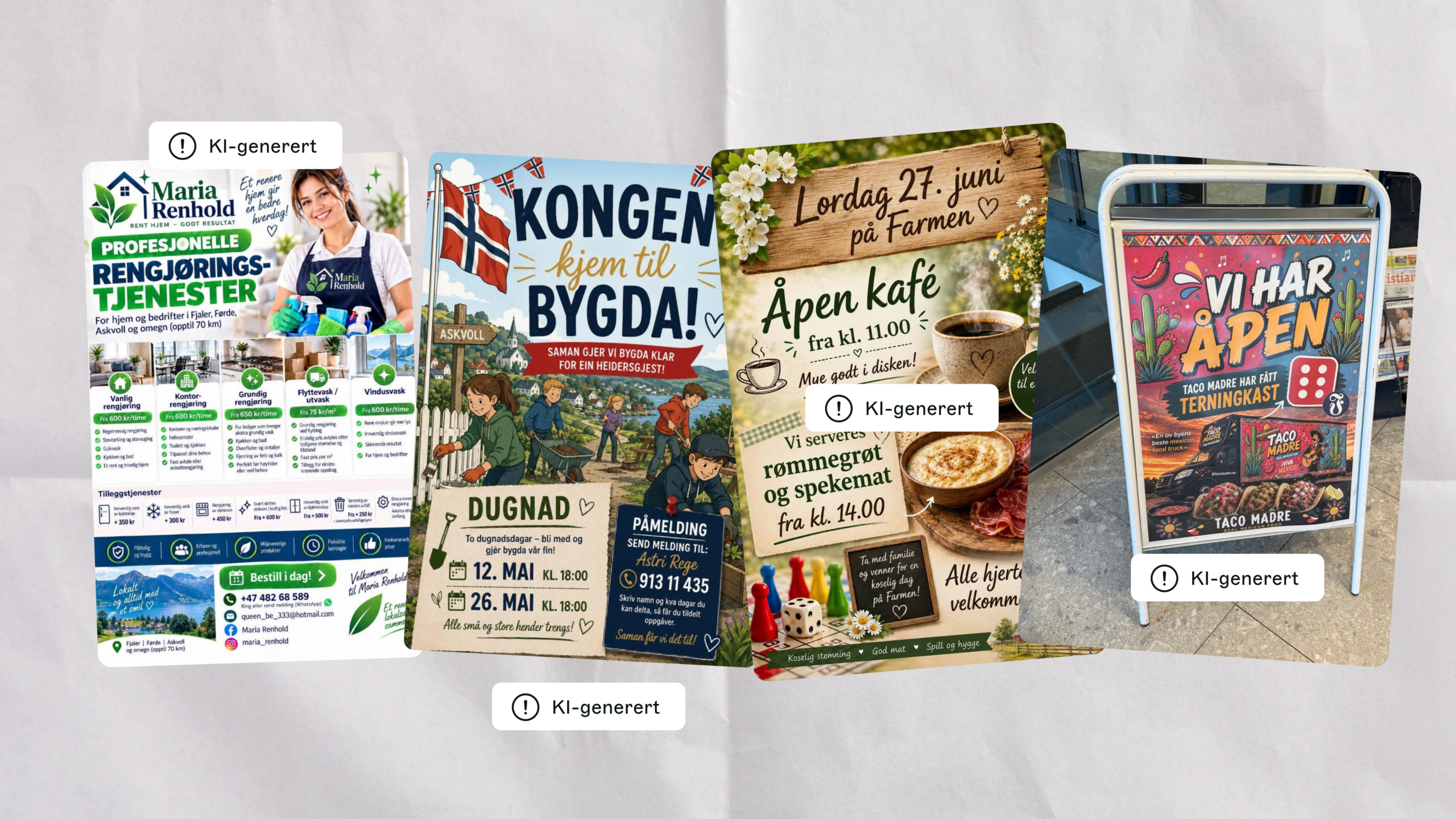
The main image is a collection of KI posters featured in an article on firda.no: “KI posters are everywhere in Sunnfjord: ‘You lose trust'”
We believe it affects the impression one gets of the artist. We humans care about the process. That’s why paintings still exist even though we have photography. That’s why you lose your medal if you use performance-enhancing drugs at the Olympics, and that’s why an original Munch can cost over 600 million kroner, while a poster can cost 150 kroner. The subject matter may be the same, but when the process is gone, it takes on a different value.
The same goes for communication. You set expectations through what you write and present. If you want to be perceived as thorough, professional, and committed to quality, your communication must reflect that. So it’s worth asking yourself whether the content you publish actually does that job, or whether it makes the company appear in a different light?

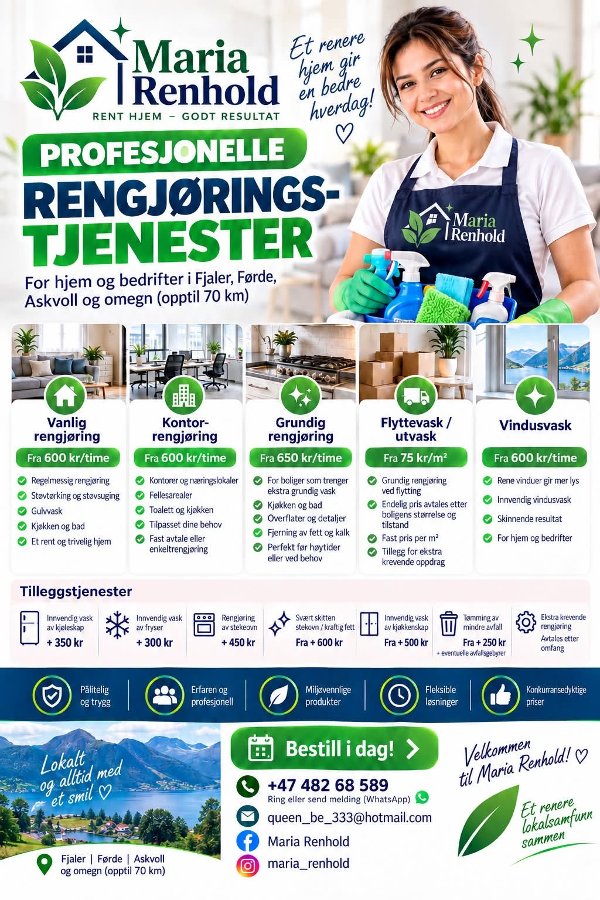
If we let AI take over the entire creative process, we risk removing this important step. It’s entirely possible to end up with a result that looks impressive, but at the same time, we lose some of the distinctiveness and thoughtfulness that make the recipient perceive you as credible. That’s why it’s too simplistic to think that the only thing that matters is whether the result looks good. We also have to accept that people may view it differently once they learn about—or see—how it was created.
It’s perhaps a bit ironic that it’s often advertising agencies that bring this up. It might seem like we’re grumpy or sulky because more people can now do things on their own. Those of us who work in communications use AI every single day—but as a sounding board for ideas and as a support tool to streamline processes and production.
This is therefore intended as good advice, not a call to stop using AI. Take advantage of the opportunities, but remember to also be a little critical of what the results say about your company. Before you publish, take a step back and ask yourself if this is something you want people to associate with your company.